What Is Sensory Play? The Benefits for Babies and Toddlers
Have you ever watched your baby become completely absorbed in something as simple as a crinkly toy, the label on a blanket or the sound of rustling paper?
These little moments of fascination are all part of how babies learn. Every new sound, texture and movement gives them something to explore, helping them discover how things work and make sense of the world around them.
Sensory play builds on this natural curiosity, creating opportunities for babies and toddlers to explore, experiment and develop new skills through play. And the wonderful thing is that so many of these experiences are already part of everyday life.
Let’s explore the benefits of sensory play and some fun ways to enjoy it with your child.
What is sensory play?
 Sensory play is any activity that encourages children to learn through their senses.
We often think of the five familiar senses – sight, hearing, touch, taste and smell – but sensory play can also involve movement, balance and an awareness of how our bodies move and where they are.
Each of these senses gives babies and toddlers a different way to explore the world around them. Through everyday play and interaction, they begin to discover how things look, feel, sound and move.
For example:
- Sight: Watching colourful objects move, exploring reflections or following floating bubbles with their eyes.
- Hearing: Listening to music, discovering different sounds or enjoying the rhythm of your voice.
- Touch: Feeling smooth, soft, rough or bumpy textures.
- Smell: Noticing familiar everyday scents, from fresh air to the smell of a favourite meal.
- Taste: Exploring new flavours and textures as they begin eating solid foods.
- Movement and balance: Rocking, rolling, crawling, stretching and discovering what their bodies can do.
Sensory play doesn’t have to be a planned activity. A walk in the park, a favourite nursery rhyme or a cuddle with a familiar grown-up can all offer opportunities for sensory exploration.
Why is sensory play important for babies and toddlers?
Sensory experiences give young children opportunities to explore, experiment and practise emerging skills. Through everyday play and interaction, they begin to discover how their bodies work, how objects behave and how they can communicate with the people around them.
Here are some of the ways sensory play can support early development.
 It encourages curiosity and discovery
Babies are natural explorers. Even before they can crawl or talk, they’re beginning to notice patterns, recognise familiar experiences and discover that their actions can make things happen.
When a baby shakes a rattle and hears a sound, or a toddler drops an object and watches it fall, they’re exploring cause and effect.
They’re also gradually developing an understanding of object permanence – the idea that something still exists even when they can no longer see it. Games like peekaboo or hiding a favourite toy under a cloth can help babies explore this concept as their understanding develops.
Toddlers might want to repeat the same game ten times over, and each repetition offers another opportunity to practise, notice details and discover what happens next.
It provides opportunities to develop movement and coordination
From reaching for a favourite toy to crawling after a rolling ball, sensory play encourages babies and toddlers to move, explore and discover what their bodies can do.
Different activities offer opportunities to practise different physical skills as they develop. For example:
- Reaching and grasping for toys helps babies practise hand-eye coordination and control of their hands and fingers.
- Rolling and crawling towards interesting objects encourages movement and helps babies develop strength and coordination.
- Scooping, pouring and transferring objects gives toddlers opportunities to practise fine motor skills and hand-eye coordination.
It supports early communication and interaction
Even the simplest activities can encourage back-and-forth interaction. When you make a sound and your baby responds with a smile, movement or babble, responding in turn helps build the foundations of early communication.
Talking about what your child is experiencing can also introduce new words and ideas. Simple phrases such as “That’s soft!”, “Did you hear that?” or “Splash, splash!” connect language with something meaningful.
Following your child’s interests and giving them time to respond helps turn these everyday moments into opportunities for communication and learning.
It creates opportunities for connection and shared enjoyment
One of the benefits of sensory play is that it’s something you can enjoy together.
For very young babies, familiar faces, voices and gentle touch are among their earliest sensory experiences. As they grow, shared games, songs and playful discoveries offer more opportunities to interact.
These moments of attention and responsiveness help nurture your relationship while reassuring your child that someone familiar is close by as they explore.
And alongside all those opportunities for learning and development, there’s the simple pleasure of having fun together!
Simple sensory play activities to enjoy with your baby or toddler
Everyday objects and familiar routines offer plenty of opportunities for sensory play. Here are six simple sensory activities you can try at home with babies and toddlers:
1. Explore different textures
Best for: Babies beginning to reach for and explore objects, right through to toddlerhood.
Gather a few clean, baby-safe items with contrasting textures, such as a soft flannel, a smooth silicone teether or a textured baby toy.
Let your child look, reach and explore at their own pace. For younger babies, gently introduce a texture to their hand or foot and see how they respond.
What they’re exploring: Different sensations, reaching, grasping and the relationship between what they see and feel.
Safety tip: Choose large, intact, age-appropriate objects without loose fibres, detachable parts or choking hazards. Avoid long ribbons, cords and items that could cover your baby’s face.
2. Sing, shake and make some noise
Best for: From birth, with activities adapted to your child’s stage.
Your voice is a great starting point for sensory play.
Sing a favourite nursery rhyme, clap out a rhythm or introduce an age-appropriate baby rattle. As your child grows, let them experiment with making sounds of their own, whether that’s shaking, tapping or discovering that two objects make a noise when they meet.
Older babies and toddlers might enjoy copying your rhythms or taking turns making sounds. Don’t be surprised if they want an encore!
What they’re exploring: Sounds, rhythm, listening, movement and early communication.
Safety tip: Keep sounds at a comfortable volume and check that rattles and musical toys are suitable for your child’s age, with no loose or accessible small parts.
3. Discover bubbles
Best for: Babies developing their visual tracking skills and toddlers who love to move.

Bubbles are a simple way to introduce movement, colour and a little unpredictability into playtime.
Blow a few bubbles and watch what happens. Your baby might follow them with their eyes, reach out to catch one or look completely surprised when they disappear!
Toddlers might enjoy chasing and popping bubbles, practising movement and coordination along the way.
What they’re exploring: Visual tracking, movement, anticipation and cause and effect.
Safety tip: An adult should blow the bubbles, keeping the solution and wand out of children’s reach. Avoid blowing bubbles directly into faces and wipe up slippery spills.
4. Make a splash with water play
Best for: Babies and toddlers of all ages, with adult support and supervision.
For babies, try gentle splashing during their usual bath, talking about the sounds and sensations.
For toddlers, a shallow tray of water with a few large, suitable cups or containers offers opportunities to scoop, pour and experiment.
What they’re exploring: Temperature, touch, movement, cause and effect, and coordination.
Safety tip: Never leave a baby or toddler alone with water, even for a moment. Babies and young children can drown in very shallow water. Stay within arm’s reach, supervise continuously and empty containers immediately afterwards.
5. Turn tummy time into discovery time
Best for: Young babies, from birth, while awake and supervised.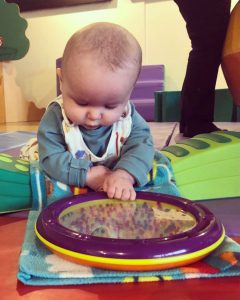
Tummy time gives babies a different view of the world and opportunities to practise lifting and turning their heads.
Try getting down on the floor face-to-face with your baby, singing to them or placing a baby-safe mirror or interesting toy nearby.
Start with short periods and follow your baby’s cues. You can also try tummy time with your baby lying on your chest, giving them another way to enjoy exploring and interacting with you.
The NHS recommends tummy time as an important part of helping babies develop their movement skills.
What they’re exploring: New viewpoints, movement, visual attention and growing control of their head and upper body.
Safety tip: Always supervise tummy time and only practise it when your baby is awake. If you’re putting your baby on your chest for tummy time, always make sure you’re fully awake, too.
6. Take sensory play outdoors
Best for: All ages, with experiences adapted to your child.
The outdoors is full of sensory experiences, and you don’t need to travel far to find them.
Listen to birds singing, watch leaves moving in the breeze or notice the changing light beneath a tree.
For toddlers, try walking on different safe surfaces, exploring the feel of grass under their feet or listening for sounds in the garden.
What they’re exploring: Natural sights, sounds, textures, movement and changes in their surroundings.
Safety tip: Keep a close eye on what little hands are picking up. Avoid unknown plants, berries, mushrooms, animal waste and small objects that could be swallowed.
How to make sensory play safe and enjoyable
Sensory play works best when children feel comfortable, interested and free to explore at their own pace. Familiar activities can be just as engaging as new experiences, particularly when children have time to investigate them in their own way.
A few simple principles can help make playtime positive for everyone.
Follow your child’s lead. Notice what captures their attention and give them time to explore. If they’re more interested in the empty container than the toy inside it, follow their curiosity.
Choose activities that suit their stage. A newborn’s sensory experiences will look very different from those of a busy toddler. Consider your child’s abilities and the manufacturer’s age guidance for any toys or equipment.
Pay attention to their cues. Turning away, yawning, fussing or becoming unsettled can indicate that a baby needs a break. Reduce the stimulation, offer comfort or try again another time.
Keep safety front of mind. Supervise activities closely, especially those involving water or objects your baby could put in their mouth. Avoid small or detachable parts, button batteries, magnets, plastic bags and other choking or injury hazards.
Keep it simple. A familiar song, a soft texture or a few minutes of face-to-face play can offer plenty of sensory stimulation.
Explore sensory play together at Gymboree Play & Music
 Sensory play at home offers countless opportunities for discovery, while classes can introduce new experiences in a dedicated play environment.
Sensory classes for babies bring together different sights, sounds, textures and movement activities, often with guidance from teachers who understand early childhood development.
They can also give parents fresh ideas to try at home, opportunities to spend focused time with their child and the chance to meet other families.
At Gymboree Play & Music, we believe in the Power of Play. Every class is an opportunity for children to explore, discover new possibilities and develop their confidence.
Our Babies class is specially designed for little ones from birth to 8 months, introducing them to the wonderful world of sensory play through songs, movement, bubbles, puppets, musical instruments and more.
From exploring new sights and sounds to enjoying gentle movement and our specially designed Gymbo Tummy Time activities, every session offers opportunities to spark curiosity and support your baby’s early development.
With expert teachers to guide you, you’ll discover new ways to play and connect with your baby, while enjoying time together and meeting other parents who live nearby.
Ready to discover more through play?
Discover our Gymboree Play & Music Babies class and find your nearest centre to start enjoying the sensory fun together!